




























































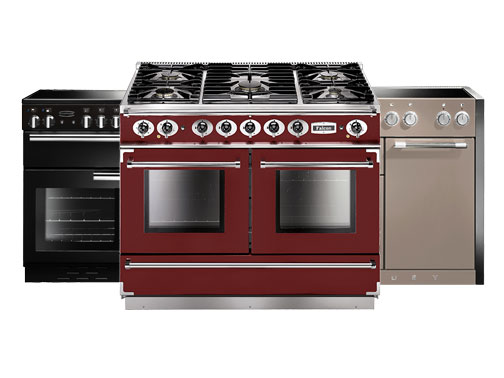
 If you have enough space in your kitchen and love to cook then you may want to think about buying a range cooker. Range cookers not only take care of a large family meal, they provide a real focal point in your kitchen. If you’re thinking of upgrading to a range cooker or replacing your existing one with a newer model take a look at the following range cookers buyers’ guide prepared for you by Dalzells. Alternatively why not visit our retail store at Markethill? We’ll give you the best advice, not to mention the best deals available in Northern Ireland and the Republic of Ireland. For range cookers think Dalzells.
What type of range cooker?
People have been using range cookers for hundreds of years with the oldest ones being a simple hearth where families would keep a pot of soup or stew boiling away and some bread in the oven underneath. Being the largest domestic cooker available they provide more cooking zones and generally two ovens or more with more cooking space than a standard cooker. Some will even heat your water.
There are various makes and models of range cooker on the market today with hugely variable price tags. They vary from the traditional farmhouse style normally associated with an AGA or Rangemaster to modern sleek designs. At the top end of the scale we have Lacanche which is available in a variety of colours and favoured by top chefs such as Jean-Christophe Novelli. Here are some general descriptions of the variations of each to help you choose the one most suitable for you. We would recommend however, that you visit Dalzells for expert advice before buying. Dalzells retail range cookers from top manufacturers including Rangemaster, Stoves, AGA, Falcon, Zanussi, Hotpoint and Belling.

Gas range cookers
Gas range cookers in which the hob and ovens are completely fuelled by gas are the most popular range cookers available. A typical 5 burner Range Cooker (some go up to 8 burners) will have some or all of the following features – ‘A’ energy rating for fuel efficiency, easy clean, large capacity grill, wok burner for evenly distributed heat when stir frying, stovetop griddle, 2 gas ovens which means you can roast your meat in one and have all your veg trays cooking in another. This is ideal if you have friends or family members who are vegetarian and would prefer to have their meals cooked separately.

Ceramic range cooker
A ceramic range cooker combines traditional range cooker style and functionality with a ceramic cooking surface which adapts to the size of the pot you’re cooking with. This not only gives you complete controllability but also helps to save energy.

Dual fuel range cooker
A dual fuel range cooker gives you the best of both worlds. It usually has a gas hob with up to 8 burners (the average being 5) and at least one electric fan assisted oven.

Induction range cooker
An induction range cooker gives you all the benefits of a traditional range cooker with the added bonus of a modern induction hob which only heats up under the pot placed on top. Not only does this give you better control when cooking and save energy at the same time it provides a safety feature if you have children running about.
Delivery & Installation
Dalzells offer free delivery across Northern Ireland and within counties Lough, Monaghan and Dublin. See our website for full delivery information. For details on installation see our appliance connection page.